Dec 18, 2007

Spies On DVD Today: Young Indiana Jones Volume Two

The Adventures of Young Indiana Jones Vol. 2: The War Years (slimmer and more attractive than Vol. 1) is simply packed with espionage adventure. Though they feature a younger version of a hero best known for his swashbuckling archaeological exploits, in this series we discover that Indy cut his teeth as a secret agent for (wait for it) French and Belgian Intelligence during WWI. Not every episode of The Young Indiana Jones Chronicles featured a spy plot, but most of those included in Vol. 2 (here re-edited into feature length "movies") do.

One need look no further than Disc 2, "Demons of Deception," for a fantastic example of this. Not only is the feature, one of the best in the series, a gripping and adult spy drama, but the truly fantastic extras take the form of documentaries like "Reading the Enemy’s Mind - Espionage in World War I." The feature itself is cobbled (rather successfully for once) out of two TV episodes. The first depicts bloody and brutal action on the front when Indy finds himself at the Battle of Verdun in 1916. He serves first as a motorcycle courier, zooming important messages between the horrors of the front and the luxury of the officers’ lives. The epic scope and impressive budget of the series are well demonstrated by a spectacular chase in which Indy, on his motorcycle, is pursued by a German biplane armed with machine guns and bombs, while the show’s intimacy and artfulness are visible in a well-cut montage at a moment when Indy must make a crucial decision. We also see Indy’s first spy work when he’s assigned to crawl across No Man’s Land and listen at the wall of the German bunker.

The second half of this feature may be the series’ finest moment. Directed by the great Nicholas Roeg (The Man Who Fell To Earth) from a script by Carrie Fisher and story by George Lucas, it depicts Indy’s brief involvement with Mata Hari while on furlough from the front. It’s very risque for 90s TV, with typically Roeg-ish slow motion shots of Indy and Mata in bed together (yes, the famous adventurer loses his virginity to the notorious spy) and even some full frontal nudity of models in an art class. The episode isn’t just adult in content, however, but in themes as well. Fisher scripts Mata as a very three-dimensional character (fleshed out beautifully by actress Domiziana Giordano), and weaves a complex May-December relationship between her and Indy, bringing out an especially good performance from series star Sean Patrick Flannery. Their final scene together, a shouting match that ends tenderly in which he denounces her as nothing more than a prostitute and she calls him out for what he is: a child pretending to be a man, is as good as any you’ll find on TV of that decade. Despite its admirable educational mandate, The Young Indiana Jones Chronicles was not just a kids’ show.

Lucasfilm’s exemplary extras are equally adult. "Flirting With Danger - The Fantasy of Mata Hari" treats its subject very seriously, and doesn’t skirt around her central skill set. "I like making comparisons between diverse nations," they quote Hari as saying about sleeping with the officers and diplomats of varied European countries. The documentary portrays Hari as the victim of a witch hunt by men suspicious of a successful and promiscuous woman more than of a legitimate espionage trial. Various experts point out that spies convicted on far more tangible evidence than her managed to escape the firing squad, and that the only evidence that Hari was a spy at all is the fact that she accepted money from both the French and German intelligence services. Then again, they argue, that’s what she did. She accepted money from men.

"Reading the Enemy’s Mind - Espionage in World War I" is a shorter but no less fascinating or informative documentary. "What you’re seeing in a way with intelligence during the first world war is how modern intelligence is born," says one expert, and indeed we do see it. The featurette conveys how ill-prepared all nations were for espionage going into WWI (especially the United States), and covers subjects I’ve always found captivating, like German sabotage in America and the notorious "Zimmerman Telegram" sent by Germany seeking Mexico’s help against the US. There are twenty-seven more such documentaries on this set, as well as seven more feature-length films, each comprised of two TV episodes. I can’t wait to delve further into revisiting this childhood favorite, and most spy fans should be delighted to find this set underneath the tree come Christmas. In addition to the espionage content, this volume also features some familiar faces, such as Christopher Lee and some blond guy named Daniel Craig, exhibiting even then (albeit briefly!) the swagger that would one day make him famous.

Dec 17, 2007

DVD Review: The Wild Wild West: The Third Season

DVD Review: The Wild Wild West: The Third Season

The first two seasons of The Wild Wild West followed the Avengers formula, albeit in a more compressed time-frame. Season One, in black and white, was a slightly grittier, slightly more realistic secret agent show set in the Old West and populated by eccentrics. In Season Two, the eccentrics took over–literally! The season premiere–and first color episode–saw Jim West face off against a nefarious cabal called "The Eccentrics." The landscape was no longer recognizable as the Old West, but a highly fictionalized–and stylized–version of it, just as the color Avengers seasons take place in a highly stylized fantasy version of Sixties Britain. The threats faced by West and his partner, master of disguise Artemus "Arte" Gordon, became more science fiction in nature, no longer grounded in ordinary secret agent stuff. This was largely thanks to diminutive recurring villain Dr. Miguelito Loveless (Michael Dunn), whose increasingly far-out schemes for world domination came to involve elements of pure fantasy, such as a method of teleporting oneself into and out of paintings in order to steal crown jewels! Another one of his plots shrank West down to a few inches tall, the same fate that befell Steed in the Avengers episode "Mission: Highly Improbable." The Avengers never came back down to earth after venturing so far out (in fact, the series ended with Steed and then-partner Tara King blasted out into space!), but The Wild Wild West does, in Season Three.

The colors, like Jim’s electric blue suit, are still as vibrant and bright as in the second season, but the Western landscape has been tamed. There are no signs of shrinkage or jaunts into paintings this season. In fact, Dr. Loveless is limited to just one appearance, after four in each previous season, effectively neutered in the weird science chaos he loves to cause. It’s as if the producers felt they’d stretched credulity as far as they could in Season Two, and had no choice but to reign themselves back in. However, the eccentric villains are still in place, ensuring that The Wild Wild West never becomes a run-of-the-mill Western. In fact, the most traditional Western storylines, as the one found in "Night of the Iron Fist," are made more fantastic by the inclusion of a bizarre villain, in that case a Serbian nobleman with a literal iron fist. The villains are usually the last person you’d expect to encounter in the Old West–a sheik or knight or an Indian rajah, often embodied by a major guest star. And they ensure that The Wild Wild West won't be mistaken for any other Western.

Another trait that separates The Wild Wild West from that genre is the gadgetry. Jim’s spy gadgets go a long way toward keeping one spur-heeled foot distinctly in the realm of espionage. He’s still outfitted with a quick-loading rig up his sleeve that surreptitiously delivers a Derringer into his hand at the twist of a wrist. This season, the tiny pistol has been modified to accommodate a Batman-like piton trailing some lightweight rope strong enough to hold Jim. That apparatus comes in handy time after time, as does Jim’s "Rosa Klebb" boot, which springs a knife from its toe, as well as one-off gadgets like a nifty glass-cutting ring. And Jim and Arte still ride around in their 19th Century Aston Martin–a customized train car equipped with all sorts of useful spring-loaded gizmos.

The glass-cutting ring appears in the season premiere, "Night of the Bubbling Death," which nicely establishes the back-to-the basics formula by evoking the series premiere. Following an updated credits sequence, Jim and Arte venture into an entire lawless town that’s against them (a source of contention between the United States and Mexico) in order to ferret out the villainous Victor Freemantle, who’s stolen the Constitution. In keeping with past seasons, Arte is introduced in disguise–just in time to save Jim from a hulking, shirtless henchman (decked out in bandoleers) named Clint Cartwheel. We get to see the inside of Arte’s jacket, and it’s lined with enough gadgets to make Q jealous. Arte also supplies a 3D scale model of the Freemantle’s hideout (an old conquistador fortress), enabling Jim to virtually retrace his blindfolded steps and infiltrate it later, bypassing the titular "bubbling death" (acid, naturally) via his piton gun. As usual, there is a beautiful woman, Carlotta. Her treachery sets the tone for this season. In seasons past, about half the time Jim was able to seduce such vixens onto the side of law and order, but this time around the women are far more often treacherous than trustworthy. Jim rarely gets the girl in Season 3, instead awkwardly ending up with a random floozy as arm candy for the tag scene.

“Night of the Firebrand” features an exception in the form of Vixen O’Shaugn-essy (played by Diamonds Are Forever’s Lana Wood), who despite the most treacherous of names is convinced to give up her lawless ways... but not by Jim’s charm. The strong-willed young woman (the titular “firebrand”) is a senator’s daughter who’s run off from Miss Primwick’s Finishing School to stand up for her (admittedly misguided) political ideals. She hasn’t been brainwashed like Patty Hearst; she’s doing what she thinks is right. Yet she’s treated as a comical character for her beliefs, and becomes the victim of a running gag in which Jim shuts her up whenever she goes off on a rant by knocking her out with the touch of a pressure point. In the end, once she’s seen the error of her ways, she starts talking about all the good she can do in the world, standing up for the oppressed, only to fall victim once more to the old pressure point trick. It’s all pretty chauvinist, even for the Sixties. Still, the same episode offers some good action, like Jim taking another page from 007's book and rigging his covered wagon with a smoke screen during an exciting chase, or Arte proving he’s handy enough with throwing knives to join the Eccentrics himself.

Loveless’s one appearance finds the troublesome doctor faking his death and then impersonating his own “uncle,” a celebrated Swiss neurologist who exhibits a striking family resemblance. (Yes, Jim actually falls for that, somehow.) The whole scheme falls short of the criminal mastermind’s most diabolical ploys of the past, with the simple goal of revenge. Loveless does, however, retain his flair for the absurd, and the episode provides some of the season’s most Avengers-ish moments, like the doctor’s “recording” of his will, squawked out by a trained minah bird! He’s also still got style (delightfully Sixties style), accessing his cliff-side clinic via an ornate elevator lined in purple silk. Missing (and decidedly missed) once more is the fantastically love-crazed Bonnie to Loveless’s Clyde, Antoinette (Phoebe Dorin). A character named Triste fills a similar role, but it isn’t the same.

There aren’t many bad episodes in Season 3, but there also aren’t nearly as many outstanding ones to highlight, either. Most of the plots are pretty standard-issue Western or spy (with the occasional clever twist, like an OPEC-like Arab consortium trying to corner the market on cotton), but contained therein are a number of memorably off-kilter moments and striking images. Samurai warriors attack Jim and Arte in downtown San Francisco! Arte battles it out in the middle of a horde of Kubrickian mannequins! All we see of a mysterious villain is his arm on the armrest of a large chair, but when Jim turns the chair around, it turns out all there is is a disembodied arm... and a phonograph speaker issuing the voice. Jim follows some Mexican henchmen through into an Adobe hut that turns out to house a harem chamber out of the Arabian Nights, complete with a lounging Cleopatra-like consort. Mutated boll weevils get it on. Masked bandits broadside a bank with a cannon mounted on their armored wagon. Jim is lured into a stagecoach by a beautiful woman, only to have the windows suddenly shut and gas pumped into the coach, Number Six-style. And so on and so forth. Great moments instead of great episodes.

The aforementioned “Night of the Iron Fist” best exemplifies how the show’s producers tailor more traditional Western plotlines to meet their needs. It’s essentially a remake of 3:10 to Yuma, with Jim transporting the criminal Count to prison while Arte lures his gang away by impersonating the nefarious nobleman. Along the way, they encounter a lot more stock Western characters (roughnecks and bumpkins) than traditionally populate The Wild Wild West, but the fun lies in watching how sophisticates Jim and Arte deal with these types, because it isn’t usually how Marshall Dillon does it. Arte, though dressing more and more like a cowboy this season, generally does so through disguises. But, frankly, he’s no Rollin Hand, and it’s usually easy for the audience, at least, to see through them. Arte also gets to show off his tough side a bit, saving Jim’s hide more times than in the past.

It’s not all the same old thing in Season 3, however. The final disc of this set contains the season’s two best episodes, both cut from horror movie cloth. “Night of the Undead” is a good old-fashioned Southern Gothic in the guise of a zombie story. It’s got lost love, faked deaths, and revenge from beyond the grave, all served up with the creepy atmosphere of the classic Universal shockers. From its unsettling beginning (Jim interrupting a Voodoo ritual, ala Live and Let Die, and shooting a “zombie” in the heart without killing him) to its evocative bayou finale, this one’s a real treat. It also provides one of the season’s best surreal moments when a phrenologist talks to the mapped, bald model of a human head on her shelf. Suddenly the "head’s" eyes open, and the shelf itself opens up, revealing it to be a person! It’s a bizarre image, and an effective jolt. (Though it makes no sense.) The ending, with glowing, radioactive zombies enslaved by the mad Dr. Articulus, reminded me quite a lot of Mark Gatiss’ novel The Vesuvius Club. I wonder if Gatiss saw this episode?

“Night of the Simian Terror”* may tip its twist too much with that title, but it serves up another very atmospheric horror, this time mimicking the then-contemporary product coming out of England’s Hammer Studios rather than Universal. The boys visit the isolated Kansas estate of a senator who hasn’t been seen in D.C. in some time. The constant wind blowing on the eerie exteriors paints Kansas like Conan Doyle’s Dartmoor, and sure enough, there’s an inhuman creature on the loose killing people. It continues as a classic “Old Dark House” style mystery, with dark family secrets and forbidden rooms. Jim uses a stethoscope and a periscope to spy through some floorboards, and Arte dons one of his best disguises as a humorously simian ape expert. All of this leads to a very dark finale, with Jim fighting both Richard (“Jaws”) Kiel and, of course, a brutish gorilla. (At one point, the gorilla actually flings a barrel at him! Could this be the origin of Donkey Kong?) This very effective pair of atypically horrific episodes (which, somewhat distractingly, share a few sets as well as their tone) provides a satisfying conclusion to Season 3, and the hope that Season 4 (due on DVD this March) will benefit from this home-stretch burst of creative energy.

If you’re a Cathy Gale Avengers fan, give this season a miss and pick up The Wild Wild West: The Complete First Season for starters. If you prefer Emma Peel, go straight to the sublimely surreal Season 2. But if you’re already a dedicated follower of Jim and Arte’s exploits, then by all means pick up Season 3. It’s not the best, but there’s more than enough great material to make it worthwhile for fans of the series.
*When watching this episode on my DVD player, the disc inexplicably skipped an entire, crucial chapter. Suddenly Jim was fighting Jaws! The only way I was able to watch that chapter was to rewind; I couldn't skip back to it. Irritating, though I have no idea if this flaw is specific to my brand of player or universal.
New Moneypenny Cover Art

Over the weekend, CommanderBond.net exclusively debuted the final cover art for Samantha Weinberg's (writing once again as Kate Westbrook) third book in The Moneypenny Diaries trilogy, Final Fling. As promised in her interview with the Double O Section last summer, Stina Persson once again provides the artwork, and once again it's excellent. (Take a note, Devil May Care!) Head on over to CBN to see the whole cover in all its glory! Personally, I don't like the colors quite as much as on the last one, but it's still a stunning, retro eyecatcher, and a vast improvement over the lame art on the first two hardcovers. And they finally saw fit to mention James Bond on the cover! (Fitting, since it is a James Bond novel, and he is the primary selling point...) Final Fling comes out in the UK on May 1, 2008; the first book in the series, Guardian Angel, finally sees a US release that same month.

And speaking of Ms. Weinberg, The Literary 007 recently posted a link to her new environmental blog, Green Wife, which isn't Bond-related at all, but does make for good reading from an excellent writer - on a subject that might just be even more important than 007... if that's even fathomable!

Dec 13, 2007

Movie Review: Hitman (2007)

If Hitman were made in the Sixties, I’d probably love it. But it wasn’t. It was made in 2007, and, for better or for worse, I have different expectations from a modern movie and a Sixties movie. Don’t ask me why. Maybe the amazing fashions, colors and hairdos of that decade go far enough that I don’t care as much about little things like plot and characterization? I’ll admit, I’m a huge sucker for Sixties glamor. Or maybe Sixties movies, with their sparse and paint-colored blood, somehow seem a little bit more innocent, thus acquitting the sleaziest of heroes as a product of his time? Probably a bit of both.

Hitman is essentially a Eurospy movie, but one made today. A sort-of suave hero (known only as Agent 47) with no discernible morals travels throughout (limited) exotic European and near-Eastern locations in the company of a beautiful woman and some third-rate gadgets, getting into (comparatively) low-budget bash-ups here and there and killing with no regard for human life, all the while playing off the CIA against Russian Intelligence and Interpol in order to find out who betrayed him. And all on a fairly tight budget of European money, with European crews, and just a couple of second-tier American or British stars thrown into the mix to lend a tad of box office clout. That’s the pattern for dozens of Sixties Eurospy scenarios, and it’s also the blueprint for Hitman.

The latest Die Hard villain, Timothy Olyphant plays the titular assassin, Agent 47, and M:I:II villain and Enigma star Dougray Scott plays the tireless Interpol inspector determined to bring him down. In a nod to the videogame on which it’s based (which I’ve never played), Agent 47 has a shaved head with a barcode tattooed on the back of it. For an agent who is supposed to be "a ghost," such an attention-grabbing appearance seems a little counter intuitive, but I’m willing to grant the movie this indulgence. In theory, it’s a cool look, although they should have cast an actor who looks badass bald (where’s Jason Statham when you need him?) instead of one who looks kind of doofy. All of the other agents of his shadowy assassination bureau also sport the same look, not only making them easy to spot in a crowd, but also hard to tell apart in a melee. There are a lot of bald guys in the movie. Most, but, confusingly, not quite all, are assassins, so be sure to look for the telltale barcode.

Despite a look that does him a disservice, Olyphant is thoroughly decent in the lead role, although the script offers him little to work with. The scenery is great. Whether it was actually shot in Moscow and St. Petersburg or not (I’m not sure), Hitman makes the most of the Eastern European locations at its disposal. (In fact, the modern Bond movies could take a note in terms of letting the camera sight-see just a bit longer!) There’s even a welcome side-trip to Istanbul, a fantastic staple of Sixties spy movies not put to enough use these days. And none of the action scenes are bad, although none are good enough for me to easily recall them a day later, either. The obligatory girl, a Russian prostitute (Olga Kurylenko), is easy on the eyes and not a bad actress despite, once again, having virtually nothing to work with, so she fulfills all the demands of a classic Eurospy leading lady. So where does it fall short?

I think it’s just in the spirit. It was those fashions, those colors, that glamor, that seething sexuality, that made the Sixties Eurospy films work so well. Unlike its forbears, Hitman is utterly sexless. It may offer more nudity (actually taking advantage of its R rating in that department, as well as the violence), but its hero is so chaste that he not only displays zero chemistry with Kurylenko, but rebuffs all of her blatant advances by zapping her with some sort of knock-out ring. Were he Tony Kendall or Ken Clark, he would have had no compunction about sleeping with her and several other random women as well! Perhaps it’s the removal of several decades that makes their brand of sleaziness so watchable, but Hitman’s (limited to remorseless killing rather than sleeping around) a little off-putting. Whatever the reason, I’ve come to expect just a tad of characterization from modern action films, and the Eurospy shorthand just doesn't work anymore.

Eurospy enthusiasts will still derive some enjoyment from Hitman (as I did, primarily from its locations), even if it's devoid of that apparently unreproducible Sixties soul. It's probably best to wait for DVD, though, rather than shelling out to see it in theaters.

Dec 12, 2007

CONTEST:
Win Mission: Impossible Season 3!

Win a copy of the the best season yet of one of the greatest spy shows ever just in time for the holidays! Mission: Impossible hits its stride in the third season, with the classic line-up (Peter Graves, Martin Landau, Barbara Bain, Greg Morris and Peter Lupus) in place for the last time. Entering is easy. Simply send an email with the subject heading "MISSION SEASON 3" including your name, mailing address and favorite spy show to the DoubleOSection by midnight, Pacific Time on Tuesday, December 18, 2007. (The favor-ite show has no bearing on results; I’m just curious!)

Read my full review of Mission: Impossible: The Third TV Season here.

One entry per person, please. Double entries will be disqualified. One winner will be drawn at random and announced in one week’s time on December 19, 2007. Winners’ names will be posted here and they will be notified via email. All entries will be deleted immediately after the contest’s close, and no personal information will be retained or transmitted to any third parties. The contest is open to anyone, but please be advised that these are Region 1 NTSC DVDs. They should play fine in any North American player, but may require special region-free players in other parts of the world. Unfortunately, the Double O Section cannot assume responsibility for items lost or damaged in transit.

Dec 10, 2007

Bourne Again?

Universal have started promoting The Bourne Ultimatum "For Your Consideration In All Categories" as of today's Hollywood Reporter. It would be nice if this stellar spy movie actually gets some legitimate recognition! Meanwhile, poducer Frank Marshall talked to ComingSoon.net about the prospects for a fourth Bourne movie:

"There were only three books written. I know they've written a fourth [The Bourne Legacy by Eric Van Lustbader, who also wrote a fifth] but it wasn't written by Ludlum," Marshall said. "Look, we would love to continue the franchise. We just need a great story, and we're not going to do it unless we have a great story, but we are working on coming up with one, and Matt said to me, ‘Look, you hand me a great script, I'm in.' Unfortunately, we're not able to do any writing at the moment [due to the writers' strike], but we're all thinking about it."

Sounds to me as close to an announcement as we're likely to get. Damon's in, Marshall's in; it all depends on a good script, and presumably that's just a matter of time. Great news!

Be sure to read the rest of ComingSoon's interview for bits on Marshall's other projects, including Indiana Jones and the Kingdom of the Crystal Skull.

Best Buy Books Bonus Bourne

Normally I recap the week's new spy DVD releases on Tuesdays, but I wanted to make sure to give an advance heads-up to potential Bourne buyers before tomorrow. Best Buy will offer an exclusive edition of The Bourne Ultimatum in a limited edition "steelbook" case (which I find kind of annoying) with a bonus disc containing an additional 40 minutes of material. I don't know exactly how limited this is, but the Best Buys around me all sold out of the steelbook versions of the two Grindhouse movies (which also contained bonus discs) by midday.

Dec 9, 2007

No. 1 Of The Secret Service And Other Eurospy Treats On DVD

Videoasia released a DVD collection last week containing a number of hard-to-find spy and spy-related movies: The Grindhouse Experience Volume 2. You get twenty films on five discs, so I can't imagine the quality is much to brag about, but there are some very appealing films in the mix, including No. 1 of the Secret Service (released here as Her Majesty's Top Gun)! The Seventies didn't produce nearly as many Bond knock-offs as the Sixties (the heyday of the Eurospy genre), but director Lindsay Shonteff pretty much single-handedly kept the genre alive with his two Charles Bind films, No. 1 of the Secret Service starring Nicky Henson and No. 1: Licensed To Love and Kill starring The New Avengers' Gareth Hunt as Bind. Both movies also featured the Moore-era Minister of Defense, Geoffrey Keen, in the M-like role. In addition to being full-blown knock-offs in their own right of Seventies Bond, these were also unofficial follow-ups to the Sixties Bond knock-off series of Charles Vine movies, which Shonteff originated with Licensed To Kill (1965) starring Tom Adams. Supposedly Shonteff made another pair of "Bind" movies in the early Nineties, Number One Gun and The Running Gun, but I've never heard of anyone having actually seen them. (Please sound off below if you have!) But all of that is just a history lesson; the only Bind/Vine title included here is No. 1 of the Secret Service. One must go into any Shonteff movie with a certain willingness to settle, but it's a fun movie sure to please avid fans of Seventies 007.

But wait! That's not all you get in this set, spy fans! Also of interest is one of one of the few other lost Seventies Bond knock-offs (via blaxploitation), Mr. Deathman, the Eurospy classic O77: Mission Bloody Mary, 3 Supermen Against Godfather (1979) and Diabolik rip-off Phenomenal and the Treasure of Tutankamen (1968)! Chances are this print of Mission Bloody Mary won't hold a candle to the excellent one put out a few years ago by Dorado Films (who have finally updated their website and are having a fabulous sale during the month of December!), but it's a fun film nonetheless. As far as I know, those others haven't seen any sort of official release in the US before. I'm particularly excited about Phenomenal; it's one I've always wanted to see. The rest of the movies in this budget-priced set will probably also appeal to Eurospy fans in one way or another; a lot of them features actors well known from the genre.

Dec 7, 2007

The Saint Returns!

Dark Horizons points the way today to a very exciting story posted at the official website of Saint creator Leslie Charteris: The Saint is being revived, and James Purefoy is the man under the halo! The Rome star will portray Simon Templar in what's described as "a two-hour pilot film for a new series of The Saint" co-produced by Geoffrey Moore, son of the most famous screen Saint to date. (Dad Roger's production company was behind both his incarnation and the Seventies revival Return of the Saint starring Ian Ogilvy.) It's unclear whether this is a pilot for a British or American television series. It's set to start shooting in April of next year after Purefoy wraps the big-screen adaptation of Conan creator Robert E. Howard's Puritan adventurer Solomon Kane. Locations include Berlin and Australia.

This will be the fourth revival of The Saint since Ogilvy, following a series of British TV movies starring Simon Dutton (which are rumored to be coming next year from the UK's Network DVD), an American TV movie starring mustachioed Australian Andrew Clarke as a Lamborghini-driving Saint for the Magnum era, and of course the Val Kilmer theatrical misfire. Let's hope Purefoy's version fares better than those! Personally, I'm very excited to see Purefoy's take on Charteris' classic hero. He's a much better fit than Kilmer.

Dec 6, 2007

Random Intelligence Dispatches For Friday, December 7, 2007

New Young Bond Cover Art

The Young Bond Dossier spotted this excellent new artwork online for the upcoming (and long overdue) American hardcover edition of Charlie Higson's third Young Bond novel, Double Or Die. (Yes, America is just getting around to Number Three even though the fourth, Hurricane Gold, has already been released in the UK.) This cover, by regular Young Bond promotional artist Kev Walker, comes as welcome news after the recent revelation of a fairly lacklustre cover for the upcoming Bond novel Devil May Care.

Nick Fury In The Incredible Hulk?

Aintitcool News runs a rumor that Nick Fury might not only appear in the upcoming Marvel film Iron Man (which itself is still unsubstantiated), but also in The Incredible Hulk! It would be pretty cool to see the one-eyed superspy popping up regularly around the Marvel Film Universe, but I still can't get behind the supposed Sam Jackson casting.

New Nick Fury Figure

Speaking of Fury, there's a great new 4-inch metal figurine of him (classic version, Steranko-style) out now from Corgi! Pictures and further details coming soon...

New Eurospy Double Feature DVD

"Euroguy," a member of the Eurospy Forum, discovered a new legitimate Eurospy DVD in the offing from Wild East Productions (who generally specialize in Spaghetti Westerns). Spy Double Feature: Red Dragon and Five Golden Dragons will be available sometime next year. The latter film co-stars Christopher Lee.

More Chan From Fox

Even though they've now released all the surviving Charlie Chan films starring Warner Oland, Fox will continue to release Chan collections with a brand new set of DVDs starring Sidney Toler in the title role. The Charlie Chan Collection: Volume 4 will be out on February 12, 2008 and include the films Charlie Chan In Honolulu, Charlie Chan In Reno, Charlie Chan At Treasure Island and Charlie Chan in the City of Darkness. The latter is a spy movie set in Paris on the eve of WWII. The set includes more of the incredible extras that have made all of Fox's previous releases in the series such a joy, and seems like a good indication that the studio plans to continue these releases until all the surviving Chans are on DVD. Once WWII hits, most of the Toler entries involve espionage elements.

Dec 5, 2007

Reminder: Timothy Dalton Appearance, Diabolik Screening In LA TONIGHT!

Los Angeles spy fans, clear your calenders for tonight if you haven't already! As I previously reported, Hot Fuzz director Edgar Wright hosts his "Wright Stuff" film festival at the New Beverly Theater, and tonight's double feature is Mike Hodges' Flash Gordon (1980, co-starring future James Bond Timothy Dalton) and Mario Bava's pop-art Sixties spy masterpiece Danger: Diabolik (1968). Dalton will appear in person to discuss his role in Flash Gordon at 7:30, and director/Bava fan Joe Dante will join Wright to introduce Diabolik at 9:40. Both films are archival prints that come directly from the studios, so this is an event not to be missed.

Dec 4, 2007

New Spy DVDs Out Today

The big spy release this week is Fox's 24: Season 6, which comes with a massive array of extras including, most tantalizingly, the entire 24 parody Simpsons episode guest-starring Kiefer Sutherland as Jack Bauer.

We also get WWII espionage hijinks in They've Got Me Covered (1943) and spy parody The Road To Hong Kong (1962) as part of the Bob Hope MGM Movie Legends Collection, which also includes Hope's collaboration with sexy spy goddess Elke Sommer in Boy, Did I Get the Wrong Number! (1966).

I've got no affiliation with Best Buy, but it's worth mentioning that they have some amazing spy deals as part of their holiday sales this week. Casino Royale (2006) is only $8.99, and The James Bond Collection Volume 3 is just $34.99!

Dec 2, 2007

New Bond Cover Art Revealed

Well, the news of the net today in the Bond world certainly revolves around Penguin's official press release revealing the cover art for Sebastian Faulks' eagerly awaited new 007 continuation novel, Devil May Care. And it's... Well, I guess it could be worse. Apparently (judging from the image), James Bond will be facing off against some sort of wood sprite in the new book. According to the press release (reprinted in its entirety over at CommanderBond.net), that's "a blood red flower with the silhouette of a naked woman as its stem." Yeah, I see that, but I think the flower imagery gets a little confused by that blood spatter. And the fact that she's green does make it look like she's just wandered in from a college production of "A Midsummer Night's Dream." But those are gripes; it's certainly an acceptable Bond image.

What's not acceptable is that credit! "Sebastian Faulks Writing As Ian Fleming?" What the hell is that??? It's disrespectful, off-putting, presumptuous and confusing. Surely Faulks can't be happy with that? How could Fleming's estate allow it? No other continuation author has ever dared write AS Ian Fleming. It diminishes the name of James Bond's creator and undercuts the critical respectability he's enjoyed in recent years. It makes "Ian Fleming" seem like a brand instead of an author. It's fine for "James Bond" to be a brand, but not for his creator! Ian Fleming was a real person, not a mantle anyone can pick up like "Franklin W. Dixon" or something! There was nothing wrong with the possessive credit found on the American editions of the Gardner novels, "Ian Fleming's Master Spy James Bond In ________ By John Gardner."

I get the idea: this is a pastiche. Faulks is writing in the style of Ian Fleming, following his guidelines for writing a thriller, even following his writing habits. But this credit makes it seem as if the author is embarrassed of his work, and wants all of his "respectable" critics and fans to know up front that this isn't his own style. It's really an appalling decision. The whole thing seems particularly disrespectful since the release is supposed to celebrate the centenary of Fleming's birth. I seriously hope that Penguin reconsiders this wording before publication this May. There's still plenty of time.

CBN asserts that "many of the [international] publishers will use this artwork." Frankly, I hope American publisher Doubleday doesn't. There's a long-standing tradition of different artwork on American and British editions of Bond first editions, which makes the books more fun to collect. Usually the British art is infinitely superior, but this seems like an opportunity for the U.S. publisher to change that pattern!

Don't get me wrong; I'm still avidly looking forward to reading Devil May Care, and I hope that it lives up to its full potential. There's truth in the adage "don't judge a book by its cover," but until the book comes out, that's all we have to judge!

Nov 30, 2007

DVD Review: The Lady Vanishes

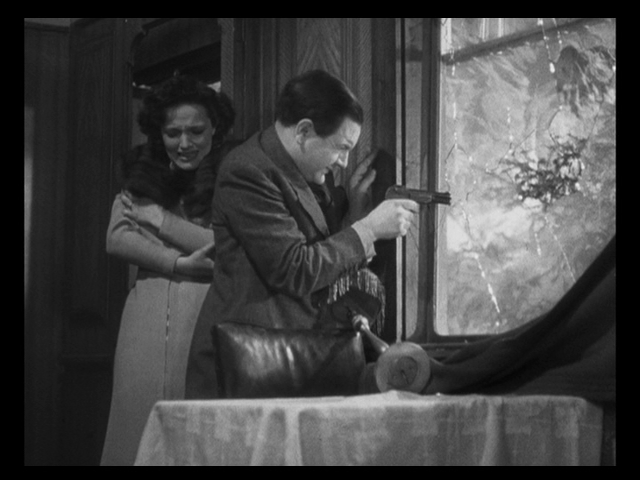
The satisfyingly thick liner notes to Criterion’s superb new DVD of Alfred Hitchcock’s 1938 classic The Lady Vanishes call it "not a slice of life, but a slice of cake." A commentary track and a "video essay" on Disc 2 then go a long way to refute that, and illuminate all of its subtext. So is it the pure, escapist entertainment that a "slice of cake" implies? Or is it something more, layered with hidden meaning and symbolism? Like most Hitchcock movies, it’s both. It’s a richly layered cake!

The Lady Vanishes was one of Hitchcock’s last English films before decamping to Hollywood, and a key bridge between his somewhat stagier early British productions and his glossy, high budget American ones, notable for their intricate setpieces. Unlike Foreign Correspondent or Saboteur, this isn’t one setpiece on top of another. Instead, most of the movie is a single setpiece (prefiguring more radical experiments like Lifeboat, Rope and Rear Window): a suspenseful, romantic spy adventure entirely confined to a train.

Well, not entirely. First we have a lengthy set-up at an Alpine hotel (its exact whereabouts disguised by the gibberish language its staff speak, assembled from odds and ends of various European dialects) introducing us to all of the characters. This portion is played mostly for comedy, although (as commentator Bruce Eder points out), here we are also unknowingly introduced to the film’s MacGuffin.

Primary figures include wealthy socialite Iris Henderson (Margaret Lockwood) and her frivolous companions, elderly (and ever-so-proper) British nanny Miss Froy (Dame May Whitty), playboy musicologist Gilbert (Michael Redgrave), adulterous couple Mr. and "Mrs." Todhunter, and the comic duo of cricket-obsessed "overgrown schoolboys" (to borrow a phrase from Eder) Charters and Caldicott (Basil Radford and Naunton Wayne). All of these vacationers are trapped in the hotel overnight while they wait for snow from an avalanche to be cleared from the train tracks.

Amidst farcical hijinks about overbooked rooms and noisy neighbors and an It Happened One Night-style "meet-cute" between Iris and Gilbert, there is an incongruous and rather alarming murder, but we’re not remotely privy as to why. And as it goes unnoticed by all of the characters, it’s purely for the audience’s benefit, reminding us that we’re in Hitchcock territory (even if it doesn’t quite feel like it yet) and that there is something sinister lurking beneath all this frivolity. Kind of like prewar Europe, still partying on the eve of strife. You see? The cake has layers! And like all of the director’s work of that time, they’re not particularly subtle.

Everyone boards the train the next day, and it isn’t until the thirty minute mark (roughly a third of the way into the film) that the lady in question actually vanishes. That lady is the nanny, Miss Froy. After helping Iris onto the train following a nasty bump on the head, and treating her to tea in the dining car, Miss Froy disappears. Iris awakes to find her gone, their compartment filled with severe Teutonic faces. All of the occupants claim to have no recollection of any English woman. Neither does the porter, or the waiter who brewed Miss Froy’s unique tea. Against all evidence to the contrary, Iris insists on her friend’s existence, leading neurologist passenger Dr. Hartz (Paul Lukas) to diagnose her as suffering hallucinations following her head trauma. Gilbert agrees to help her in her search, on a lark at first, but then more seriously as clues start amassing that suggest she’s telling the truth.

The brilliance of this part of the movie is that Hitch and writers Sidney Gilliat and Frank Launder provide separate, plausible reasons for all of the characters we’ve gotten to know to lie about having seen the governess. The adulterous couple doesn’t want to risk exposure should there be an official inquiry. Charters and Caldicott don’t want to do anything that might delay the train for fear of missing a crucial cricket match back in England. Even a stage magician traveling with the apparatus for his trick "The Vanishing Lady" has his reasons for lying.

It’s difficult to discuss the final act of the film without revealing too much, but when one of the characters turns out to be a British agent, the film becomes a rare early example of the "hero spy" genre. Spy films of this era (including many of Hitchcock’s) tended to portray spies (usually German) as the enemy, fifth columnists thwarted by an everyman hero. While The Lady Vanishes adheres to that everyman (or, in this case, "everywoman") tradition for heroine Iris, the actual spy is a good guy too, and a very atypical sort of movie secret agent.

The train eventually ends up in unfriendly territory, surrounded by the Gestapo-like secret police of a foreign power. All the British characters are gathered in the dining car (for tea, of course!), and wind up rallying around their nation’s agent, shooting it out with the enemy to provide cover. This scene exemplifies the sort of propagandist themes Hitchcock would infuse most of his wartime films with: patriotism (in this case British, and not American as in Saboteur), international responsibility and anti-isolationism. The film’s pacifist (a term at the time more associated with cowardice and Nazi collaboration than with a legitimate peace movement) abandons his British brethren, exiting the car waving a white flag. For his efforts, he’s gunned down. Everyone else, men and women, rich and poor, risk everything to escape. Even the comic bumblers Charters and Caldicott prove themselves refreshingly handy with firearms. This final scene, confined not just to the train, but to a single car, represents a uniquely Hitchcockian blend of humor and suspense. The situation is a real nail-biter, but the "veddy English" stiff-upper-lip resignation of the characters about the whole bothersome affair lightens the mood.

Film historian Bruce Eder discusses the more obvious symbolism of this scene and more subtle touches throughout the film in his solid, highly informative, wall-to-wall commentary. The guy never even pauses to take a breath! He’s well-prepared, and he knows his subject, making for a good track. (Although he does occasionally inject some personal opinion not directly related to the film, particularly about current US foreign policy!) Throughout the commentary, Eder gives plentiful production tidbits, delivers a plausible origin for the term "MacGuffin" (generally attributed to Hitchcock himself), and makes an interesting comparison between the opening of this movie, in the hotel, and that of Rear Window. In The Lady Vanishes, we’re introduced to all the characters by briefly eavesdropping on snippets of each of their conversations; in Rear Window, we’re similarly introduced to Jimmy Stewart’s neighbors via his own voyeurism, but mostly sans sound. (It should be noted Hitchcock makes excellent use of sound and music throughout The Lady Vanishes, something various other directors coming from a silent film background were never able to master.)

Disc 2 includes a "video essay" by Hitchcock scholar Leonard Leff. This is basically another, shorter commentary, delivered over a thirty minute montage of scenes from the movie cut together with behind-the-scenes stills and posters. While it covers some of the same ground as the audio commentary (both men discuss the framing of a scene in which someone’s glass is poisoned in the dining car, for instance), it also offers a nice counterpoint to it. Leff and Eder disagree on certain interpretations, particularly with regards to the Charters and Caldicott characters. Leff believes that they’re supposed to be gay, while Eder refutes that and argues that they’re essentially overgrown schoolboys, representative of a certain class of British men of that period. Both make plausible cases for their points of view.

Of particular interest to spy fans, Leff takes a whack at defining the "spy picture," a task I’ve pretty much concluded is impossible after rethinking every definition I ever come up with. Leff calls it a "subgenre of the crime picture" and states that it came out of fiction. (Didn’t pretty much every film genre?) One phrase he uses to describe spy movies that I quite like is "just inside the borders of the possible." He postulates that Hitchcock’s sextet of British thrillers leading up to and including Lady all fall within the spy genre, but after further consideration concludes that they’re something different: "The Hitchcock picture." I think that both labels are apt, but I do agree that Hitchcock is essentially a genre unto himself. I’d love to pinpoint Foreign Correspondent as the genesis of the contemporary "action movie," but since it failed to spawn any serious and successful imitators on an equivalent scale (besides others by the director himself) until... probably Dr. No, I cannot identify it as the genesis of anything. One inescapable conclusion, however, is that Alfred Hitchcock was absolutely integral to the development of the spy genre. The video essay is both instructive and thought-provoking, and leaves a viewer with plenty to ponder.

This disc doesn't include any of the making-of documentaries we're used to from the Warner and Universal Hitchcock sets, and lacks the welcome comments from the ubiquitous Pat Hitchcock and Peter Bogdonovich, but, while I miss those, the alternative is frankly preferable. Those featurettes do start to run together a bit after you've watched so many of them, and they become somewhat repetitive. The "video essay" is less than a full-on documentary featurette, but really much more than the printed essays, or text features, that Criterion loves so much. A featurette might tell you about the making of the movie, but a video essay tries to interpret it for you, like a film school lecture. At least they offer a few different interpretations to choose from! And it does offer some behind-the-scenes info: it goes into detail about what Hitch himself added to the existing script, which was adapted from a novel.

We also get to hear from the auteur himself, in an eight-minute excerpt from Francois Truffaut’s "legendary 1962 audio interview" with Hitchcock. Even he discusses the much-mooted "poisoned drink" scene, and offers a few unique insights on the film while attempting to talk over a French translator.

By far the biggest extra on Disc 2, if not the most instantly captivating, is the inclusion of an entire other movie, Crook’s Tour. Crook’s Tour is a spin-off from The Lady Vanishes, featuring the popular Charters and Caldicott characters (who also appeared in Carol Reed’s Night Train To Munich, again supporting Margaret Lockwood, and their own radio serial) in starring roles. Crook’s Tour is definitely not Hitchcock, and clearly much lower budget, but it’s a very generous inclusion nonetheless, and a film that’s never been available on DVD before. The transfer is also superb for a B picture of its vintage, if not up to the quality of the truly remarkable picture and sound on the main attraction.

The Criterion disc is rounded out by a comprehensive gallery of international poster art and behind the scenes stills (featuring young Hitchcock with lots of hair!) and two interesting and very readable essays (by Geoffrey O’Brien and Charles Barr) in the aforementioned booklet. All of this is wrapped up in a very handsome package. Not many DVD cases compel me to write about their beauty, but everything about this design–from the vintage poster artwork to the colors to the attractive spine to Criterion’s relatively new logo, which has finally grown on me–is so pleasing to the eye that it bears mention. It’s the kind of DVD that you’d be happy to add to your collection even if it didn’t contain such a wonderful movie just because it looks so good on the shelf! This is one of the best Hitchcock DVD releases to date, and a must-purchase for fans of the director.

Nov 29, 2007

More Info On Upcoming Spy TV DVDs

The excellent resource TVShowsOnDVD has had a lot of news lately on upcoming spy releases. Today, they follow-up yesterday's news item on The Wild Wild West: The Fourth Season with cover art and an official press release... which sadly seems to confirm that the reunion telefilms I mentioned yesterday will not be included.

They also report that Acorn Media will release the first season of Intelligence, a drama about Canadian spies, on April 29, 2008. The first season is 14 episodes and stars former Max Headroom and former Sherlock Holmes actor Matt Frewer. I don't know anything about his series or about the Canadian Security Intelligence Service (CSIS), so my interest is definitely piqued.

Finally, the site did some digging to provide some answers about a wide release of Get Smart. I'd been wondering about this, because TimeLife's exclusive rights to the show were supposed to be for one year, starting last fall, and should have expired by now, yet we've still seen no sign of this show turning up in stores. According to TVShowsOnDVD, the exclusive window means only that other Warner affiliates (HBO Home Video in this case) can't sell it during that time, not that TimeLife will offer it in stores as soon as the window closes. When Get Smart is eventually released commercially, it will be via HBO and may not include the same extras as the TimeLife release or the same fantastic packaging. As to when that happens, that's up to HBO. My guess is they're waiting to tie in release of at least the first season (or maybe the whole series) with next summer's theatrical debut of the new Get Smart movie starring Steve Carrell. So fans who've been waiting patiently for a cheaper alternative to TimeLife will have to wait a little longer...
Mini Review: Daniel Craig In The Golden Compass

I have to confess, I haven’t read any of Phillip Pullman’s books. I’ve been meaning to, but as the movie got closer that didn’t seem like such a good idea. The trailers looked good, and I just wanted to see Daniel Craig’s first big post-Casino Royale role. Reading the books shouldn’t be a prerequisite to seeing the movie, right? As it turns out, in the case of The Golden Compass (as with some of the Harry Potter movies), I suspect it would have helped.

Events in Chris Weitz’s very impressive-looking, big budget adaptation seem to happen because they’re supposed to, because they happen that way in a book and that’s what the core audience will be expecting, and not because one movie scene leads logically into another. Like the most recent Potter movie, scenes seem rushed and crammed in. It’s always a challenge to compress a lengthy book into a movie, and this one could have used some more judicious cutting. (Not shortening, mind you; the movie didn’t seem overly long. Just devoting more time to certain key scenes and eliminating ones that weren’t.) I’m sure that fans of the book will get more out of the movie than I did, if only to see some of their favorite moments realized. As a diehard Potter enthusiast, I certainly enjoyed seeing the whirlwind presentation of scenes and images from Order of the Phoenix, even if they didn’t coalesce as well as a whole as the prior two film adaptations. In the case of The Golden Compass, Pullman seems to have created a compelling and fantastic world, and the movie’s primary strength is in how that’s realized. There is room in this universe for Victorian orphanages, outrageous Art Deco flying machines, Cossack warriors, cowboys, armored polar bears, exploding laboratories, a sinister church-like organization called the Magesterium and even some spy gadgets: robotic wasps (shades of the Avengers movie?) called "spy flies." Surprisingly, all of these disparate elements blend well together as imagined by Weitz and production designer Dennis Gassner (who will lend his talents to the next Bond film as well). Costume designer Ruth Myers, too, deserves praise.

Also uniformly good is the acting. Craig does a good job as Lord Asriel (a role originated on stage by Timothy Dalton), although I was surprised at how small his part is. (The marketing campaign certainly presents him as one of the main stars.) His two former leading ladies, Nicole Kidman and Eva Green (neither of whom share any scenes with him here), are both excellent, especially Green (also in a relatively small role). Tom Courtnay, star of one of my favorite obscure Sixties spy films, Otley, also turns in a good performance, and the man with the golden gun himself–of course–completely commands his single scene. (I’m told Christopher Lee’s role of "First High Councilor" is larger in subsequent books, hence his casting here.) Single season Mission: Impossible star Sam Elliott (how weird is that?) is his reliably good self, and even newcomer child star Dakota Blue Richards makes a very convincing lead. But none of that acting is enough to overcome the "going through the motions" feel of the adaptation itself.

In the movie’s defense, it does get better as it goes along, and I cared more about the characters and their fates by the end. Or, more accurately, by the time the movie stops, since it doesn’t really have much of an ending. (Especially Craig’s storyline, which leaves off on a cliffhanger.) It’s clearly the opening salvo in a trilogy, and hopefully with the groundwork laid, subsequent installments will be more daring. Speaking after tonight’s screening, director Weitz revealed that all the principal stars, including Craig, were signed for the sequels (which would shoot back-to-back) should this one perform well enough to warrant them.

Note: This "extended preview" shows all sorts of Daniel Craig scenes that don't appear in the movie, including a kiss with Nicole Kidman. (The two characters never even meet in the final cut.)

Nov 28, 2007

Random Intelligence Dispatches For November 28, 2007

Rendition On DVD

According to The Digital Bits, New Line will release this fall's politically-minded CIA drama Rendition on DVD on January 15. DVDActive adds that extras will include "an audio commentary with director Gavin Hood, an 'Intersections: The Making of Rendition' documentary, an 'Outlawed' featurette, deleted and alternate scenes, and the theatrical trailer." The film, which stars Jake Gyllenhaal, Meryl Streep and Reese Witherspoon, was one of several high-profile flops this year that dealt with current events.

Final Season Of Wild Wild West Due In March

TVShowsOnDVD.com reports that the fourth and final season of the Avengers-ish spy Western hybrid The Wild Wild West will be released March 18, 2008 by CBS/Paramount. It's set to include all twenty-four fourth season episodes, but there is no word now on the two TV reunion movies, The Wild Wild West Revisited (1979) and More Wild Wild West (1980). I was hoping those would be included as bonus features. Maybe Paramount has plans to release them on their own down the line, but that somehow seems unlikely... The Third Season came out last week, and I should have a full review up soon.

More Alex Rider To Come!

I had been under the impression that Anthony Horowitz's popular and influential series of novels about teen spy Alex Rider were set to conclude with Book 7, which materialized earlier this month in the form of the bestselling Snakehead. (I haven't read it yet because I'm not caught up with the series, but reviews have been wildly positive.) However, as Snakehead's publication drew near, it became clear that that wasn't the case. (Whether it ever was or I was just plain mistaken, I'm not sure.) Now Horowitz foresees three more books, ending the series with number ten. The author told Reuters, "The big secret is to stop while the books are good. I dread stopping. I love the books and the books are loved." I guess it is a classy move to wrap up the ongoing story and cut off the series before it starts to sag, but I'm definitely glad he's at least planning a few more. (I wish Charlie Higson would do the same with Young Bond!) Horowitz estimates the final three books will take him five years to complete.

He's much less enthusiastic about prospects for an Alex Rider film franchise, blaming the failure of the first movie, Stormbreaker, on its American distributor's perplexing decision to dump the promising feature. "Harvey Weinstein decided not to distribute it [in the United States]. It is one of the most bizarre and annoying things that the film didn't get given its shot in America. To this day I don't know why." I certainly sympathize with the author, and share his frustration. I really can't understand why the film was so unceremoniously dumped last fall, with virtually no advertising and a terrible (and misleading) poster in hardly any theaters! Horowitz says he's written a screenplay for the second book, Point Blanc, but "the chances are fairly slim" of that getting made.

Nov 27, 2007

New Spy Comics Out This Week: Iron Man: Director of S.H.I.E.L.D. and Left On Mission

...or rather, last week. But new comics don't ship till Thursday this week, so these are still the freshest batch!

First up, that Iron Man: Director of S.H.I.E.L.D. Annual (Marvel) that writer Christos Gage had teased as taking its queue from Sixties Bond films and Steranko’s Nick Fury comics hit the shelves. The Iron Man Annual proves just how difficult it is to mix the spy and superhero genres, even for a writer who managed to successfully pull off this blend once before, in his enjoyable Union Jack miniseries. The problem inherent in the mixture is that superheroes are (generally speaking) invincible and spies are (theoretically) not. In Ian Fleming’s books, 007 is prone to all sorts of nasty bodily harm. In the movies, certainly less so, but all of their suspense depends on the knowledge that Bond is human, and could, in theory, be killed. (The movies work the least when they get too far away from this concept, as in Moonraker, and present 007 as completely invulnerable.)

On his mission to effect regime change in the fictional country of Madripoor, Tony Stark is stripped of the armor that makes him Iron Man. Good set-up! Stark, the current director of global espionage network S.H.I.E.L.D. is going on a dangerous mission himself, with only his guts and a few gadgets to rely on! Just like those Steranko Fury stories. Unfortunately, that promising concept is immediately abandoned. It’s made clear from the outset that Stark’s Iron Man armor is hovering in low orbit, just a cell phone call away if he needs it. And as soon as he gets into trouble, he’s immediately tempted to summon it rather than thinking (or even fighting) his way out of the situation. Furthermore, apparently Stark now has an "undersheath" of armor that he can "extrude at will" from within "the hollows of [his] bones." He does so every time he gets into a scrap in this comic, thus completely taking him out of potential peril and wrecking the whole "spy genre" idea. I love spy gadgets, but I hate when they go too far. It’s a really fine line, and the producers of the Bond films haven’t always walked it very well. (Eurospies are often even worse!) Comics are slightly more forgiving (an invisible car is OK for Nick Fury, but not for 007), but full metal body armor summoned psychically from within one’s bone marrow is going too far.

Stark may have the accoutrements of a secret agent (courtesy of S.H.I.E.L.D.’s Q-like armorer, named "Boothroyd" by Steranko in a nod then subtle enough to be an homage, but now probably actionable enough to necessitate a re-Christening as "Gaffer") and the requisite pulchritudinous entourage (three very lovely S.H.I.E.L.D. bodyguards), but he’s too much of a superhero to ever be in peril. On top of that, the basic storyline is pretty slight anyway, a hodgepodge of underdeveloped ideas like a superweapon introduced in the final pages that may be sentient. (Granted, it’s difficult to develop too much plot in a single issue.) Harvey Tolibao’s artwork is certainly pleasing enough (though I don’t quite understand why the frequently shirtless Stark is drawn with the musculature one generally associates with the Incredible Hulk, seeing as his superpowers come from armor, not physical might!), but ultimately this Iron Man Annual is a cautionary example of what not to do when mixing spies and superheroes. Let’s hope Guillermo del Toro pulls off a better balance with his Champions movie!

Meanwhile, for better espionage comics, one need look no further than the slightly belated but wholly satisfying climax to Boom! StudiosLeft On Mission. Issue 5 brings this enthralling, real- world-grounded spy yarn to its (in some ways) inevitable conclusion, and does so in style. Artist Francesco Francavilla, who’s been a star here since Issue 1, gets to really show his stuff in an appropriately flashy 7-page "silent" segment. Like Steranko, who pioneered the silent comic book sequence in Nick Fury, Agent of S.H.I.E.L.D. #1, writer Chip Mosher knows when to use words and when to ease up on the verbiage and let his story unfold purely in pictures. Steranko did it to highlight the action (and demonstrate the stealthiness of Fury’s infiltration of a secret fortress); Mosher does it to build suspense and highlight the emotional resonance. Steranko had the advantage in that he was drawing his comic himself; Mosher bravely entrusts his artist with conveying his lead character’s emotional climax. Fortunately, Francavilla is more than up to the task, once more aided immeasurably by the very impressive coloring of Martin Thomas. Left On Mission has been a damn good-looking book from the start, so it seems appropriate that its key moments rest on the shoulders of Francavilla. The one thing this issue doesn’t offer that all the others have is a fabulous new spy location for Francavilla and Thomas to bring to vivid life (retaining the last issue’s Moroccan setting), but at this point a new location would have probably detracted from the important story beats.

Left On Mission has been a joy to read in individual installments (though I still don’t understand that title!), but will probably play out even better when collected as a trade paperback this winter. The storyline, involving murky loyalties, doomed romance and serious ethical questions about the business of spying, is reminiscent of Le Carre or even Fleming at his more maudlin (people act surprised when I group those two together, but read Casino Royale! It’s a grim look at espionage!), but the action is more in keeping with Bourne or Bond (at his more down-to-earth), making an appropriate combination for the medium. It seems like just about every indie comic gets optioned for a movie these days; I certainly hope there’s an ambitious producer out there flipping through Left On Mission. Furthermore, I hope this creative team plans to revisit the spy genre soon.
Random Intelligence Dispatches For November 27, 2007

On DVD Today

Today's the day... TimeLife's long-awaited Complete Series set of The Man From U.N.C.L.E. is officially released! (As a mail-order only item.) However, if you order on their website now, they're listing a ship date of next week. And the 3-Disc Collector's Edition of Hot Fuzz is out today, including the Timothy Dalton commentary track found on the original Region 2 release.

Tradecraft: Chuck Gets A Full Season

The Hollywood Reporter reveals that NBC has picked up the "back 9" episodes for Chuck, giving the new series a whole season's order of 22 episodes total. (Whether that whole season ever actually materializes, of course, depends on the progress of the latest negotiations between the WGA and the AMPTP and a quick resolution of the writers' strike.) Chuck has been getting better and better as it's gone on, and it's definitely one of my favorites of the new TV season. The recent revelation of Alias-like cabals and secret organizations within the CIA could be a bad sign, though, if it means we should expect this show to become as convoluted as that one...

Now let's play catch-up...

Equalizer Artwork

Amazon has now posted artwork for Universal's upcoming DVD release of The Equalizer: Season One. The set is due out Feb. 12, 2008 and costs $49.98. The Equalizer starred Callan star Edward Woodward as a former British intelligence officer who rights wrongs. It kicked off the career of 24 co-creator Joel Surnow, and certainly influenced Matt Nix's summer spy hit Burn Notice.

Moneypenny Diaries Come To America!

Some great news that I failed to report sooner (but later mentioned in passing): CommanderBond.net has reported that Samantha Weinberg's superlative trilogy of James Bond novels, The Moneypenny Diaries (which I've raved about plenty), will at last see a U.S. release! The first novel, Guardian Angel, will be published by Thomas Dunne Books (a division of St. Martin's Press) on May 13, 2008, just a week after Sebastian Faulkes' eagerly awaited new Bond novel, Devil May Care. Amazon doesn't have a cover image yet, but I really hope they hire Stina Persson, who did the cover for the paperback of the second book, and will do the British edition of the third, to do the artwork. I also hope that Thomas Dunne Books does a better job marketing this excellent series than the British publisher did. This could be an opportunity for Weinberg's books to really catch on, and find the vast audience they richly deserve!

John Frankenheimer Collection

MGM has announced a new John Frankenheimer Collection including three of the director's spy classics: The Manchurian Candidate, Ronin (still the largest collection of Bond villains on screen together, I think) and The Train, as well as the DVD debut of The Young Savages. The collection is due out January 22, and will retail for $39.98.